

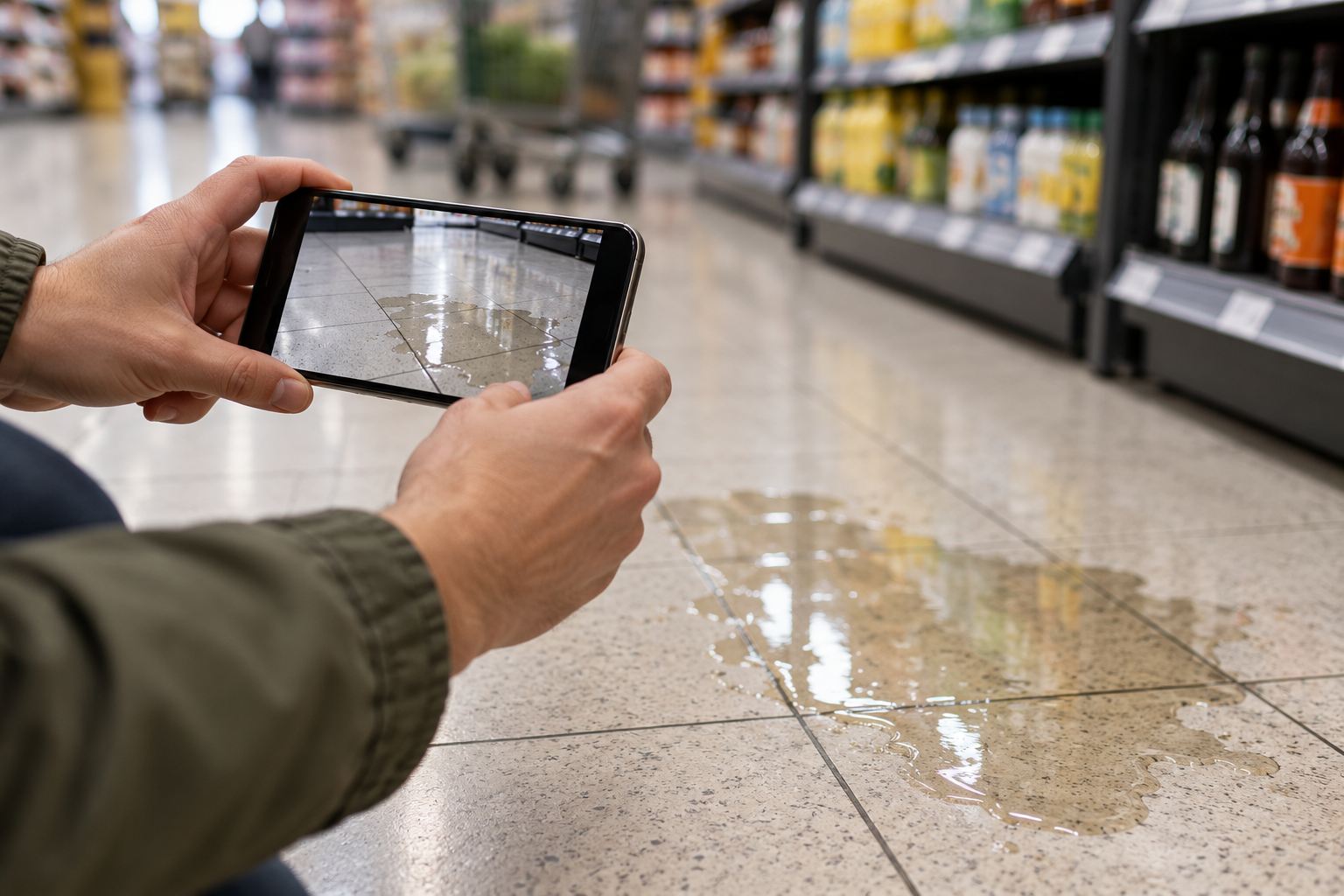
After a fall in a store, evidence can change quickly: a spill may be cleaned, a display moved or video overwritten. Once immediate safety and medical needs are addressed, a clear record of the location and condition can help explain what happened. Do not put yourself at further risk to gather evidence.
Why the condition and timing matter
A fall alone does not establish that a store is legally responsible. California Civil Jury Instruction 1003 addresses an unsafe condition, whether the responsible party knew or should have known about it, and whether it took reasonable corrective or protective steps. Evidence about inspections, warnings and how the condition developed can therefore matter.
Photograph the scene without changing it
If it is safe, photograph the condition and the surrounding area. A close-up can show a spill or uneven surface; a wider view can show the aisle, nearby display, entrance or warning sign. Keep the original files. Do not move an object to recreate the incident or edit a photo in a way that changes what it shows.
Make a factual incident report
Tell the manager or appropriate employee where and when the fall happened. Ask for the person’s name and a copy or reference number for any report. Stick to what you observed. If you do not know how long a condition existed or what caused it, say that rather than guessing. Keep your own written account even if the business does not give you a copy of its report.
Preserve witness and visit information
- Ask willing witnesses for a name and a way to contact them.
- Keep receipts, appointment confirmations or other records showing when you were on the property.
- Note the store address and specific aisle, doorway, stair or parking area.
- Save the shoes and clothing you wore without altering or discarding them.
- Keep relevant messages and correspondence with the store or its insurer.
Ask promptly about video preservation
Tell your lawyer if you saw cameras or believe video may exist. A preservation request should identify the date, approximate time, location and relevant events. Footage from before the fall may be useful as well as the fall itself. A request does not guarantee that footage exists or that the business will provide it voluntarily; obtaining records may require additional steps.
Organize records of the impact
Keep treatment records, bills, receipts for injury-related expenses and documents about missed work. A brief, accurate diary can help you recall practical changes in daily activities. Document what actually happened, including uncertainty and improvement, instead of trying to make the record sound more serious.
Bring the unanswered questions
Who controlled the area? Was another business responsible for cleaning or maintenance? Was there a warning? What do you know firsthand, and what did someone else tell you? These are useful questions for investigation. If public property may be involved, mention that promptly because different procedures may apply.
Discuss your next steps
DFG LAW, APC evaluates California premises liability claims. Call 888-341-4562 or request a free consultation in English or Spanish. You can contact us even if you were unable to take photographs or make a report at the scene.
Legal reference: Judicial Council of California, CACI 1003, Unsafe Conditions. General information; liability and deadlines depend on the circumstances.